


James Lang
How design and build grew up, and so did I (ish!)
17 March 2026
Wow, after more than 30 years working across London’s commercial agency and design and build sectors, I’ve found myself reflecting on just how much the industry has changed.
The market I stepped into in 1989 barely resembles the one we operate in today… is that for the better or for worse? I’ve been a part of it all and am here to give you my take!
My first role was at Farrar Stead and Glyn. An unqualified agent earning £4,500 a year, but who cared when a pint of lager was £1.08, a Mars Bar 25p, and a pint of milk 28p. By those standards, life was good!
The working day looked very different too. Smoking on the tube was perfectly normal during the commute, with the £1.20 packets of cigarettes following me into the office.
Much of my time was spent driving around South West London visiting B1 development sites in my bright orange Fiat Uno. There were no mobile phones, no congestion charge, no ULEZ, and certainly no Lime bikes darting through traffic.
If I needed to make a call, the nearest red phone box did the job. A quick scan of the rather colourful cards left inside was unavoidable (you know the ones I’m talking about!). Then it was back to the office to fax an offer through for signature and return.
A promotion eventually brought an upgrade to a Peugeot GTI and a car phone, essentially a brick with an aerial. But for those of you who are old enough to remember them – slamming one of these down on the pub table was the universal sign you meant business.
And business itself was simpler. Lots of meetings in the pub over a pint or in a ‘greasy spoon’ over a full English. Discussions about 25 year institutional leases were the norm, with a possible break at 15. These were agreed then dictated, typed, and posted first class for 19p. Design and build rarely entered the conversation.
Looking back, it was a very different era. One that feels almost unrecognisable compared to today’s workplace and deal-making landscape…

The reputation problem
Eventually, I crossed to the “dark side”, as design & build was often known. It carried a slightly mischievous reputation, occasionally involving a new TV or even a kitchen upgrade in return for helpful information.
It was seen as “construction”. A bit dirty. Not particularly professional. Clients worried they were being ripped off. Design quality was poor and technical design hardly existed, with construction drawings most likely done by a draughtsman. Variations and changes were initialled by the client during a site walkaround. CGIs didn’t exist – hand drawn sketches sufficed.
Over the years D&B has cleaned up it’s reputation and is integral to lots of deals, which I couldn’t be prouder to be a part of. So, what have I seen that’s changed?
The big shifts
1. The lease revolution
The emergence of flex operators like Regus emerged and began reshaping our environment. Flexibility entered the conversation for the first time. Shorter leases have become the norm, enabling more tenant relocation.
2. Continuous adaptability
I’ve mentioned in a previous HOPSHOT – the only certainty is uncertainty. We’re forever in periods of economic and geopolitical downturns, from the dot-com crash, 2008 financial crisis, and COVID. But we continuously adapt and improve as an industry.
Each of these forced us to mature. To professionalise. To focus on value, longevity and genuine business outcomes, not just shiny surfaces.
3. The office became a tool, not just a place
Previously, the office was a place you went. Rows of desks or cubicles. Private offices for senior staff with a clear hierarchy that signalled ‘them and us’. Lighting was with harsh LUX levels. Smoking was allowed. Tea points were hidden away. No wellness rooms or amenity areas. Furniture was solid wood and made to survive anything.
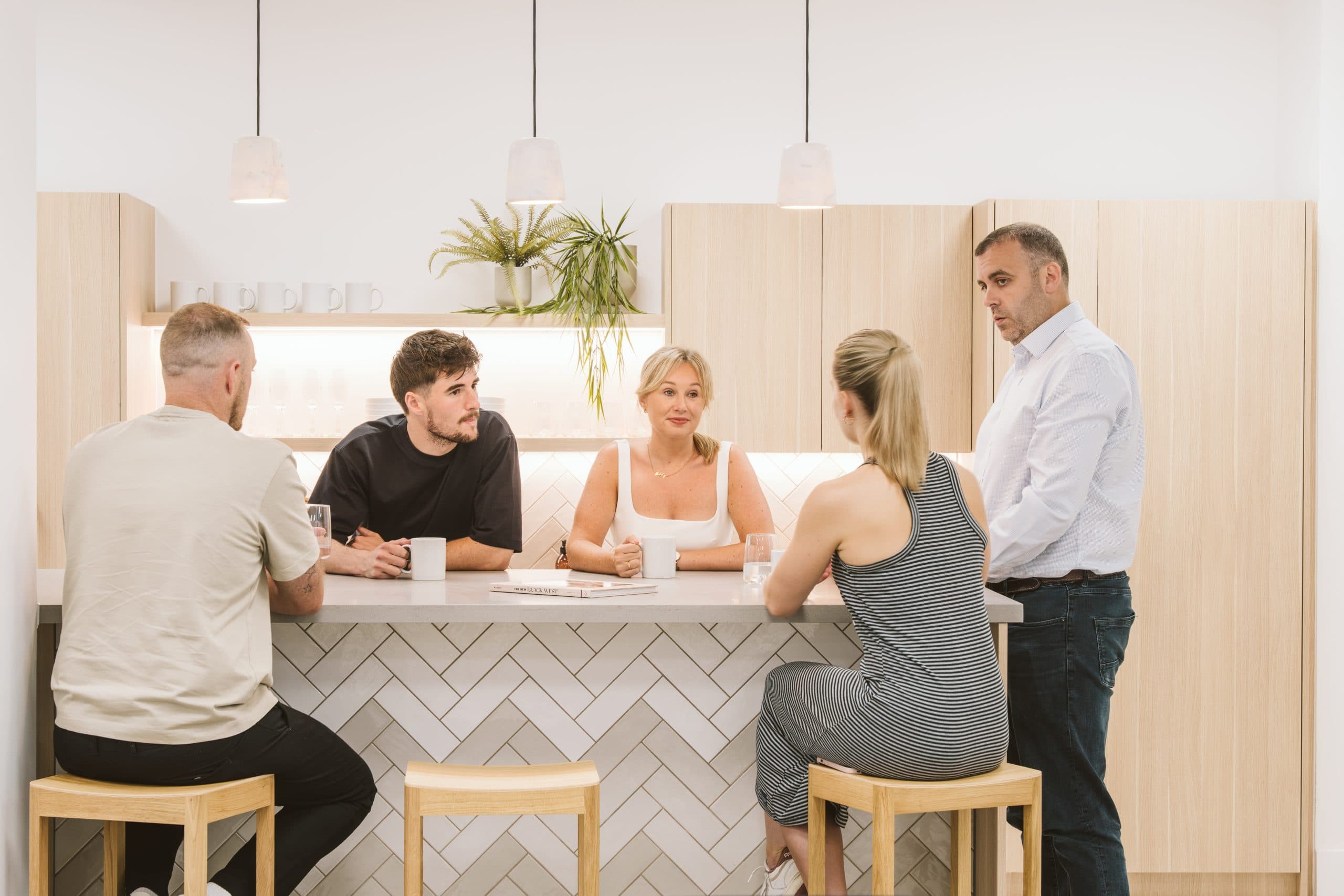
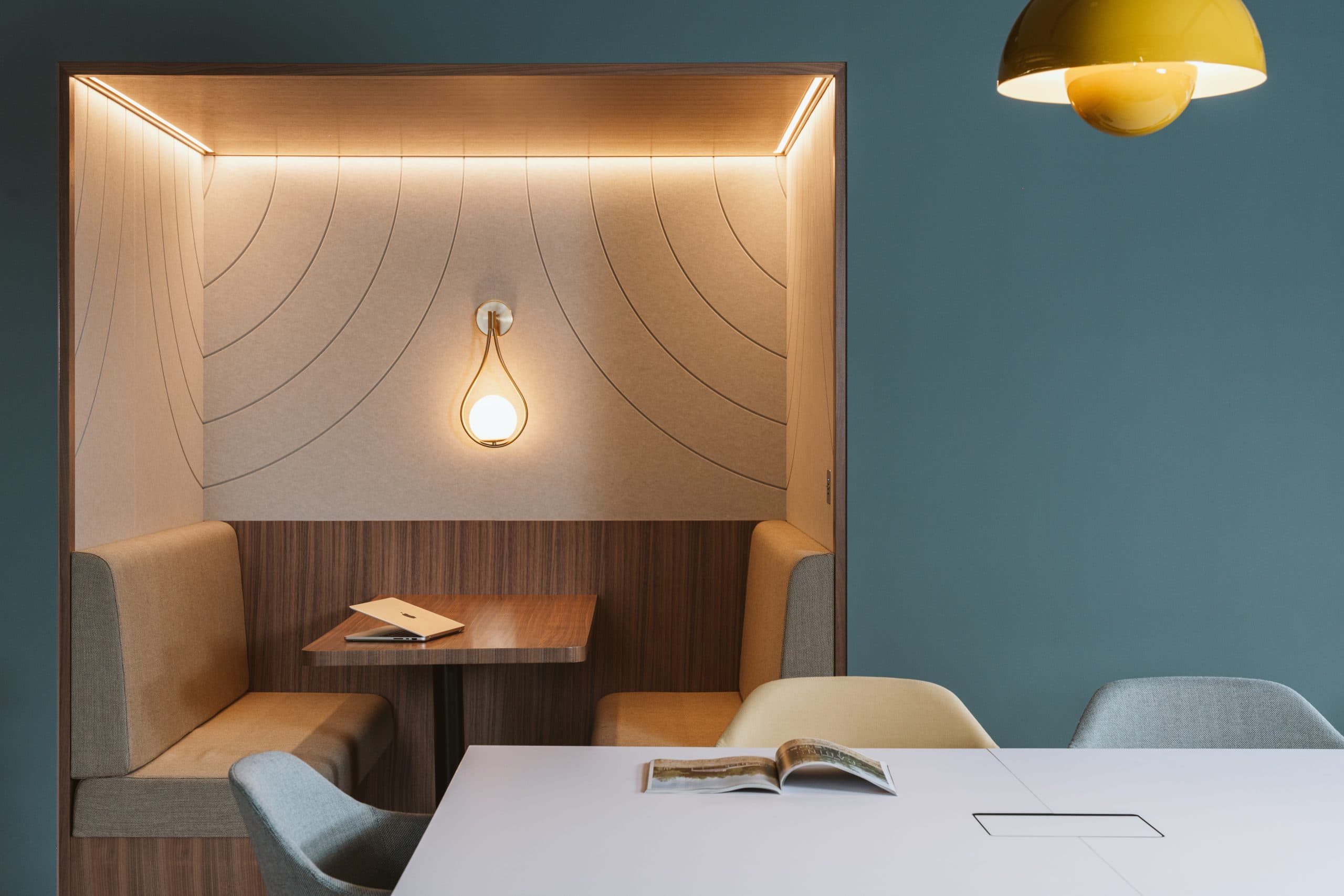
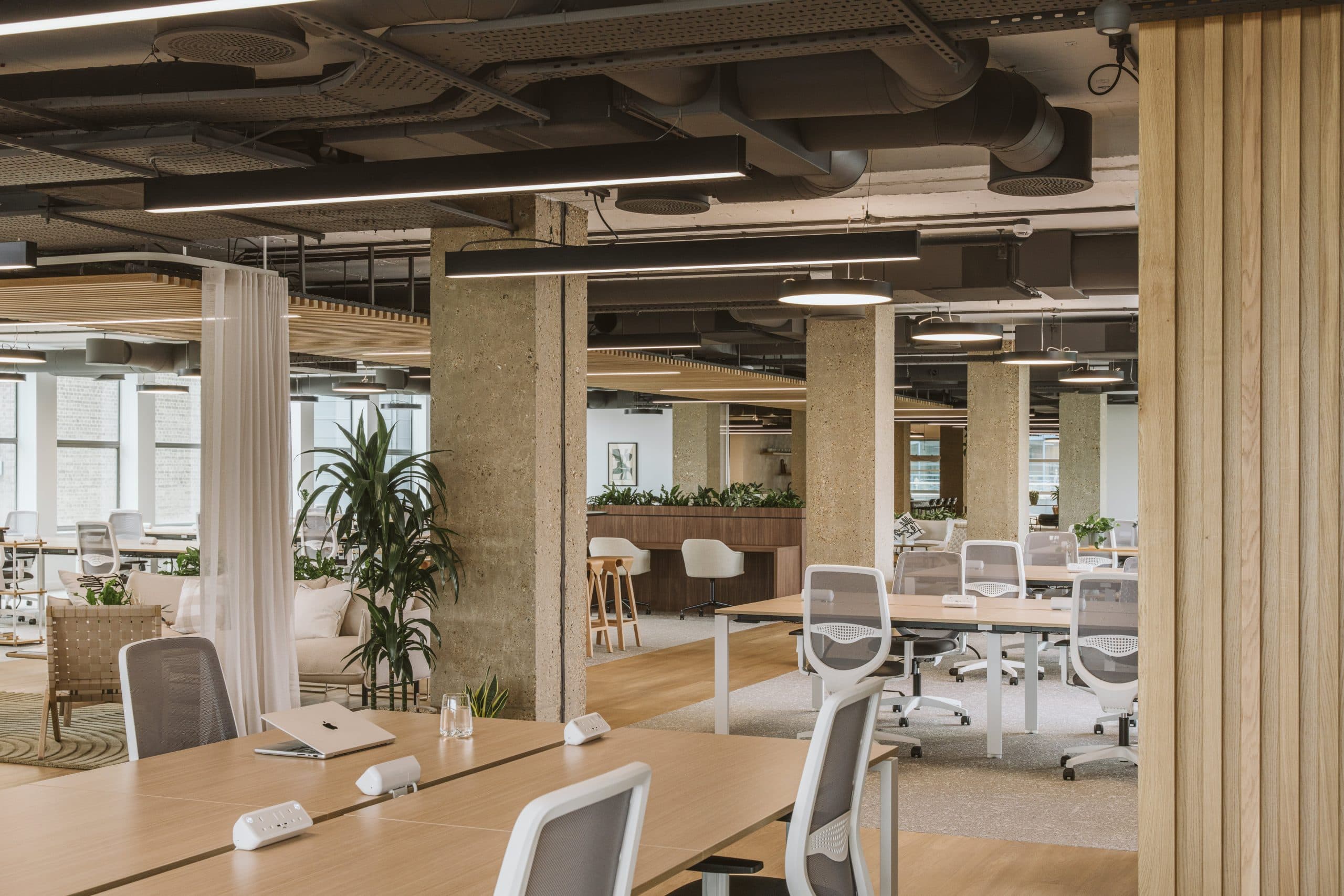
Now, it attracts and retains talent. It builds culture. It drives performance. It has collaboration, wellness and amenities.
M&E systems, technology and sustainability are all embedded in the process. From hidden tea points to central social hubs. From rigid desks to collaborative, flexible environments.
The designer’s job today is far harder, and far more important. Interior designers, architects, consultants and D&B companies are all integral to making workplaces a success.

I take testing flexibility in the workplace very seriously…
From “dirty” to trusted
Over the past 30 years, I’ve watched design and build transform from:
- Transactional to consultative
- Opaque to transparent
- Purely functional to deeply human-centric
- “Just construction” to strategic partner
And that’s a good thing.
The industry’s reputation has improved because it had to. Clients became more informed. Leases became more flexible. Work became more dynamic. Technology raised standards. And frankly, the cowboys got squeezed out.
Today, design and build is integrated into commercial negotiations. It’s data-driven. Sustainability-led. Experience-focused.
We’re not just fitting out space. We’re the ones shaping how people work and feel.
For better or for worse?
Do I miss £1 pints, greasy spoon meetings, and drawing on paper plans? Occasionally.
Would I swap today’s professionalism, creativity and purpose? Not a chance.
The London property and D&B industries have grown up, and I’m proud to have grown up with them. Well, for those of you who know me, the latter is probably subjective…
Here’s to the next chapter of our industry, I’m genuinely excited to see what’s next as the next generation take the charge!